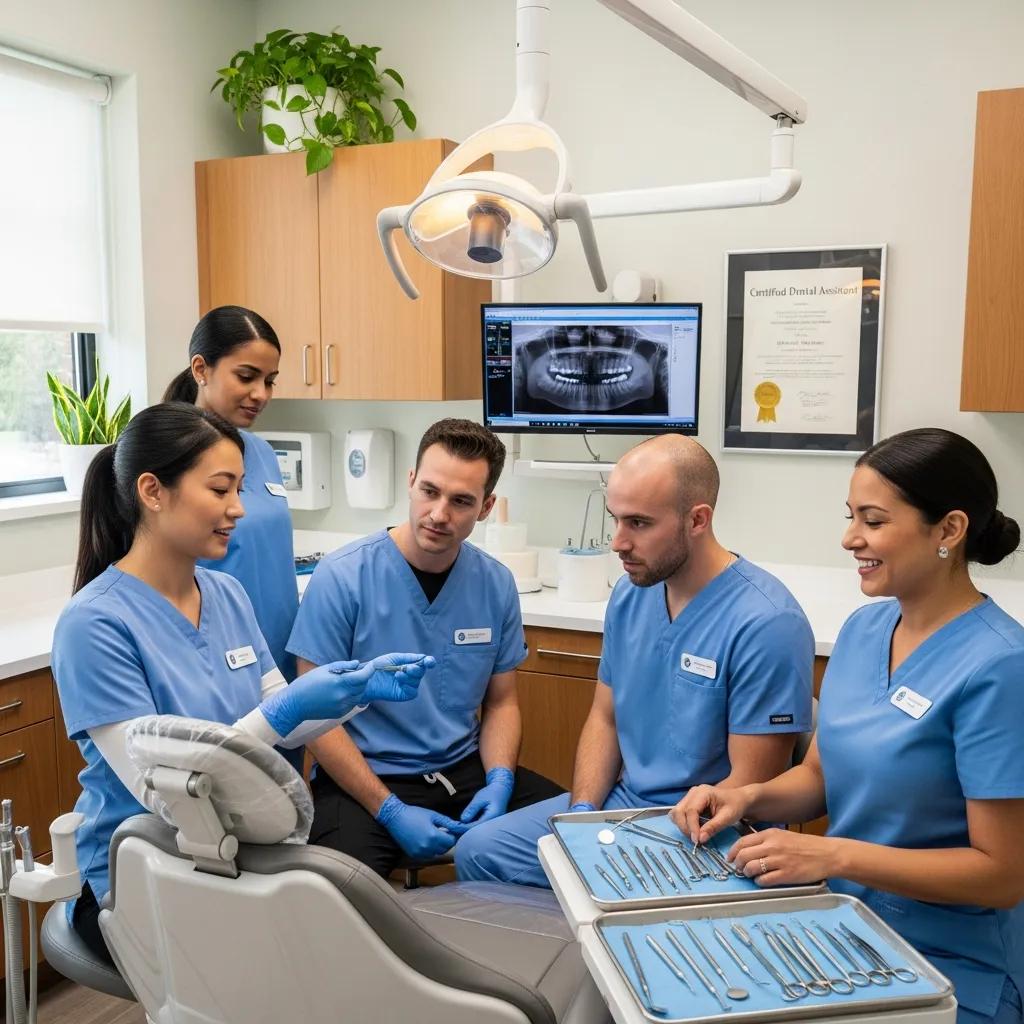
Essential Skills for Dental Assistant Certification
Essential Skills for Dental Assistant Certification: Comprehensive Requirements and Exam Preparation

Becoming a certified dental assistant is an important step in advancing your career in the dental field. Certification strengthens professional credibility, improves clinical competency, and prepares dental assistants to perform both clinical and administrative responsibilities safely and effectively. Certification programs, including those offered through structured training providers such as Dental AssistEd, help dental assistants develop the essential skills required for modern dental practice. This guide explains the clinical, administrative, and technological skills required for certification, along with exam preparation strategies and career benefits. Understanding these requirements helps dental assistants prepare confidently for certification and long-term career success.
What Clinical Skills Are Required for Dental Assistant Certification?

Clinical skills are the foundation of dental assisting and directly impact patient safety and treatment outcomes. Certification programs evaluate a dental assistant’s ability to perform procedures safely, follow infection control protocols, and assist effectively during dental treatments.
Key clinical skills include infection control procedures, instrument handling and sterilization, chairside assisting techniques, dental radiography knowledge, patient preparation, moisture control, and assisting during restorative and preventive procedures.
Training programs such as Dental AssistEd provide structured clinical instruction designed to help dental assistants develop these competencies while preparing for certification and real clinical environments.
Mastery of clinical skills ensures safe patient care and prepares candidates for certification examinations and clinical responsibilities.
How Does Infection Control Impact Certification Success?
Infection control is one of the most critical components of dental assisting and is heavily emphasized in certification programs and clinical training.
Dental assistants must understand sterilization procedures, instrument processing, surface disinfection, proper use of personal protective equipment (PPE), hand hygiene, and prevention of cross-contamination.
These procedures follow CDC and OSHA infection control guidelines, which are required standards in dental healthcare settings.
Training programs such as Dental AssistEd teach infection control protocols that align with regulatory requirements and prepare dental assistants for certification exams and safe clinical practice.
Proper infection control protects patients, dental staff, and the clinical environment.
Which Dental Radiography Skills Are Tested in Certification Exams?
Dental radiography is a key clinical skill evaluated in many certification programs, particularly for assistants pursuing radiography certification or expanded clinical functions.
Dental assistants must understand radiographic safety principles, radiation protection techniques, patient positioning, image processing, and infection control related to radiographic procedures.
Certification programs evaluate knowledge of radiographic theory, safety protocols, and clinical application.
Programs such as Dental AssistEd prepare students through structured instruction and hands-on training in radiographic principles and safety standards.
Understanding radiography enhances diagnostic support and improves patient care.
What Administrative and Soft Skills Are Needed for Dental Assistant Certification?
Dental assistants must also develop administrative and interpersonal skills to ensure efficient dental practice operations.
Key administrative skills include patient scheduling, maintaining accurate patient records, understanding dental terminology, assisting with insurance documentation, and supporting front office operations.
Soft skills such as professionalism, communication, organization, and teamwork are essential for providing effective patient care.
Training programs such as Dental AssistEd incorporate both clinical and administrative skill development to prepare dental assistants for real workplace environments.
These skills support efficient clinical operations and improve patient experience.
Why Are Patient Communication and Teamwork Essential for Certification?
Patient communication and teamwork are essential components of dental assisting and are emphasized in certification programs.
Dental assistants must communicate clearly with patients, explain procedures, provide reassurance, and support patient comfort.
They must also work closely with dentists and other dental team members to ensure smooth clinical procedures.
Training programs such as Dental AssistEd emphasize communication and teamwork skills as part of comprehensive dental assistant education.
Strong communication improves patient trust and enhances clinical efficiency.
How Do Administrative Duties Influence Certification Eligibility?
Administrative knowledge helps dental assistants understand dental office workflow and patient management systems.
Dental assistants must understand patient scheduling, chart documentation, dental terminology, infection control documentation, and compliance procedures.
Training programs such as Dental AssistEd prepare students to perform both clinical and administrative responsibilities, ensuring complete readiness for certification and employment.
Administrative competency supports professional efficiency and patient care quality.
How Does the Dental Assisting Certification Process Work?
The certification process varies depending on the credential being pursued and the state in which the dental assistant works.
National certifications, such as the DANB Certified Dental Assistant (CDA), require passing certification exams that evaluate infection control, radiography, and general assisting knowledge.
State-approved training programs, such as those offered through Dental AssistEd, prepare dental assistants for certification and expanded clinical functions by providing structured education and hands-on training.
Certification validates clinical competency and improves career opportunities.
What Are the Eligibility Criteria for Dental Assistant Certification?
Eligibility requirements vary depending on the certification and state regulations.
Candidates may qualify through completion of an accredited dental assisting program, completion of approved training programs, or obtaining clinical experience under dentist supervision.
Programs such as Dental AssistEd provide structured training pathways that help dental assistants meet eligibility requirements for expanded functions and certification preparation.
Meeting eligibility requirements ensures candidates are properly prepared for certification.
Dental Assistant Certification & Licensure Requirements
Dental assistants can take the license test after completing a training course of 9~11 months to obtain a dental assistant certification. Additional expanded work typically requires passing state qualification tests, completing a training program, obtaining a degree, or gaining clinical experience for a certain period of time, depending on the state.
Dental Assistant and Dental Hygienist-comparison with US, 2023
How Can Candidates Effectively Prepare for the Certification Exam?
Effective preparation includes studying clinical procedures, infection control principles, radiography safety, dental terminology, and chairside assisting techniques.
Candidates should use structured training programs, textbooks, instructor guidance, and hands-on training opportunities.
Programs such as Dental AssistEd provide comprehensive education designed to prepare students for certification exams and clinical competency.
Consistent study and clinical training improve certification success.
Which Emerging Technologies Should Dental Assistants Master for Certification?

Modern dental assisting requires familiarity with digital technologies used in dental practices.
Key technologies include digital radiography systems, electronic health records, intraoral cameras, and digital charting systems.
Training programs such as Dental AssistEd incorporate modern dental technology education to prepare assistants for contemporary clinical environments.
Technology competency improves clinical efficiency and employability.
What Role Do Digital Radiography and Electronic Health Records Play in Certification?
Digital radiography improves diagnostic imaging while reducing radiation exposure and improving efficiency.
Electronic health records allow dental teams to maintain accurate patient documentation and improve communication.
Certification programs evaluate knowledge of these technologies as they are standard in modern dental practices.
Training through programs such as Dental AssistEd prepares dental assistants to work with digital systems safely and effectively.
Understanding these systems is essential for modern dental assisting.
How Are New Technologies Integrated into Certification Skill Requirements?
Certification programs continue to evolve to reflect current dental technology and clinical standards.
Dental assistants must understand modern clinical equipment, infection control standards, and digital workflow systems.
Training programs such as Dental AssistEd prepare students to adapt to technological advancements and meet certification expectations.
Technology competency improves career readiness.
What Are the Career Benefits of Obtaining Dental Assistant Certification?
Certification improves employment opportunities, professional credibility, and clinical competency.
Certified dental assistants are often preferred by employers because certification demonstrates professional training and clinical knowledge.
Training programs such as Dental AssistEd help dental assistants gain the skills necessary to qualify for certification and expanded clinical functions.
Certification supports long-term career growth.
How Does Certification Influence Job Opportunities and Growth?
Certification increases employment opportunities and allows dental assistants to perform expanded clinical duties where permitted.
Dental assistants with formal training and certification often have greater career advancement opportunities.
Programs such as Dental AssistEd help dental assistants develop skills that improve employability and professional advancement.
Certification strengthens career stability.
What Are the Latest Industry Trends Affecting Certified Dental Assistants?
Dental assisting continues to evolve with increased use of digital technology, infection control standards, and expanded clinical functions.
Dental assistants must maintain competency through continuing education and structured training.
Programs such as Dental AssistEd help dental assistants stay current with modern clinical practices and certification requirements.
Continuing education supports long-term professional success.
This comprehensive skill set ensures dental assistants are prepared for certification, safe patient care, and successful careers in modern dental practice.
