What Does a Nitrous Oxide Monitoring Course Teach Dental Assistants?
A nitrous oxide monitoring course teaches dental assistants how nitrous oxide works, how it affects the body, how delivery equipment works, and how to watch a patient safely from the start of sedation through recovery. Dental AssistEd's course covers all of this online and at your own pace, through video lessons with a quiz after each one, a final quiz, and a supplemental lesson on capnography. Here's a lesson-by-lesson look at what you'll learn, what monitoring actually means for an Illinois dental assistant, and who can enroll.
What "Monitoring" Means for an Illinois Dental Assistant
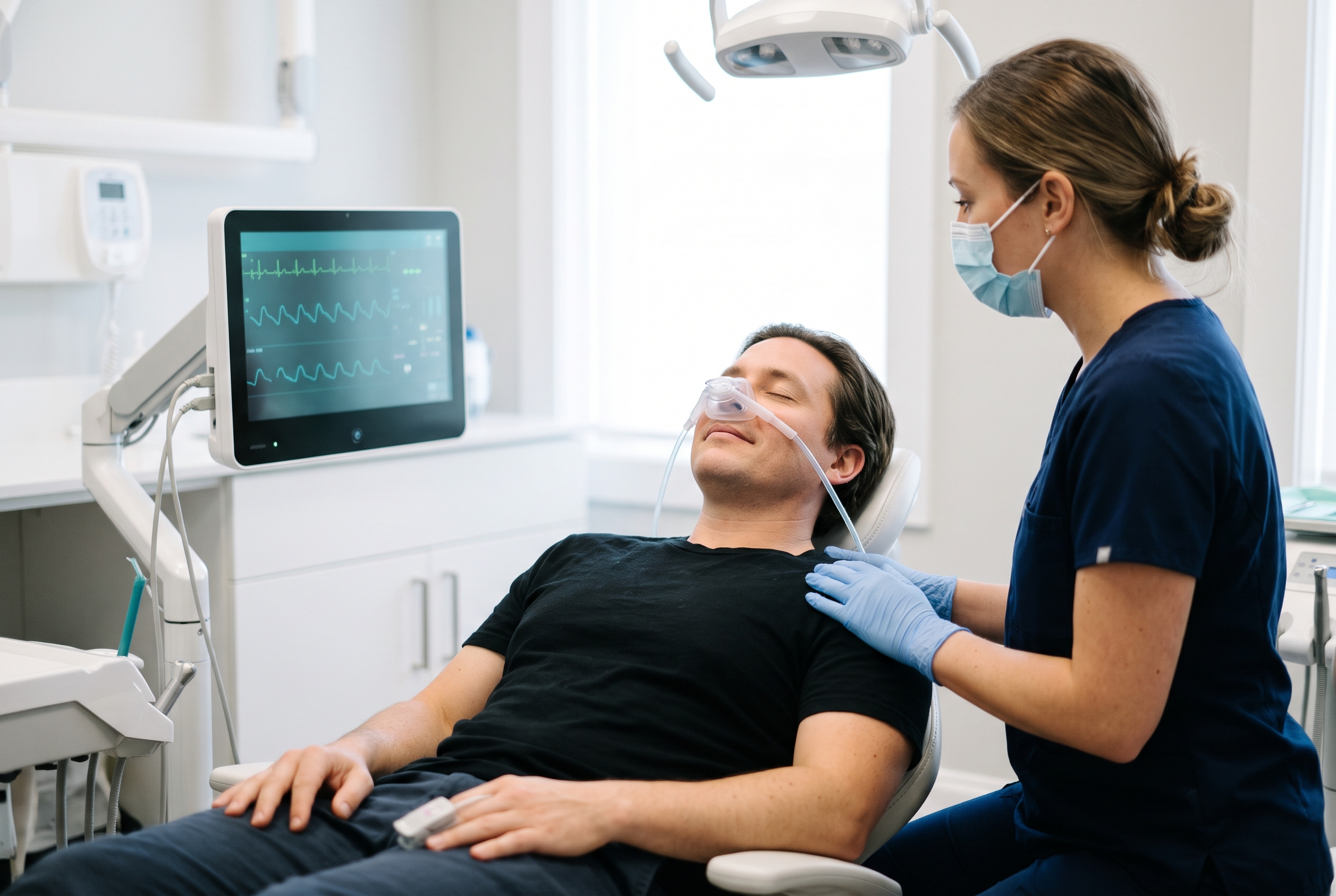
Before getting into the lessons, it helps to know what the role involves. Under Illinois rules (68 Ill. Adm. Code 1220.245), a qualified dental assistant can monitor a patient during nitrous oxide-oxygen analgesia. The dentist, or a qualified dental hygienist, is the one who starts the flow of nitrous oxide and takes the patient off it when the procedure is done. The dentist must remain in the facility, and under the Illinois Dental Practice Act, a dentist can supervise no more than 4 dental assistants monitoring nitrous oxide at one time.
In other words, the assistant's job is to watch the patient closely and recognize when something needs the dentist's attention. That's exactly what the course is built around.
Module 1: Foundations of Nitrous Oxide
The first module builds the background you need before you monitor a single patient.
Lesson 1, History and Evolution of N2O: how nitrous oxide went from a 19th-century discovery to one of the most widely used forms of sedation in dentistry.
Lesson 2, Fundamental Characteristics of N2O: what nitrous oxide is, its basic properties, and why it works well for dental patients.
Lesson 3, Evolution of Professional Standards and Education: how training and safety standards for nitrous oxide have developed over time, and why they matter for your role.
Lesson 4, Monitoring and Sedation: an introduction to sedation levels and what monitoring involves.
Each lesson is followed by a short quiz, so you confirm your understanding before moving on.
Module 2: Anatomy, Monitoring, and Equipment
The second module is the core of the course, covering the clinical knowledge you'll rely on chairside.
Lesson 5, Inhalation Sedation and Anatomy: the anatomy involved in breathing in nitrous oxide, including the airway.
Lesson 6, N2O Monitoring: what to watch for during sedation, including vital signs, oxygenation, and the difference between appropriate analgesia and oversedation.
Lesson 7, Delivery Systems and Equipment: how nitrous oxide-oxygen delivery equipment works, along with equipment safety and scavenging.
Lesson 8, Physiological Effects: how nitrous oxide affects the body and how patients typically respond.
Lesson 9, The Journey of Nitrous Oxide: how nitrous oxide moves through the body, from the moment it's inhaled until it's cleared.
Like Module 1, every lesson ends with a quiz.
Module 3: Checklist and Aftercare
The final lesson brings everything together into a practical routine, covering the checklist and aftercare steps for a nitrous oxide appointment, including recovery and documentation. A final quiz wraps up the course.
Supplemental Lesson: Capnography in N2O Monitoring
The course also includes a supplemental lesson on capnography, which measures the carbon dioxide a patient breathes out. It's a useful tool for understanding how well a patient is breathing during sedation, and it gives you extra depth beyond the core lessons.
Who Can Enroll
Illinois sets the eligibility rules for dental assistants who monitor nitrous oxide. Dental AssistEd's course asks that you:
Are at least 18 years old
Hold a current Basic Life Support (BLS) certification
Have at least 1,000 hours (about 6 months) of hands-on experience as a dental assistant
If your BLS needs renewing, Dental AssistEd's Basic Life Support course includes the American Heart Association BLS card. For a full breakdown of requirements and cost, see our Nitrous Oxide Monitoring Certification in Illinois guide.
How the Course Works
The Nitrous Oxide Monitoring course is online and self-paced, so you can work through the lessons around your schedule instead of attending set class times. Each lesson is a video followed by a quiz, and you receive an instant printable certificate when you finish. The course is $450 per person.
The Bottom Line
A nitrous oxide monitoring course gives you the knowledge to help keep patients safe during sedation: how nitrous oxide works and affects the body, how delivery equipment operates, what to watch for while a patient is sedated, and how to handle recovery and aftercare. In Illinois, that knowledge supports a clearly defined role, where the dentist starts and stops the nitrous oxide and you monitor the patient throughout.
Ready to add nitrous oxide monitoring to your skills? Explore the Nitrous Oxide Monitoring course or contact us if you have questions about whether you qualify.
